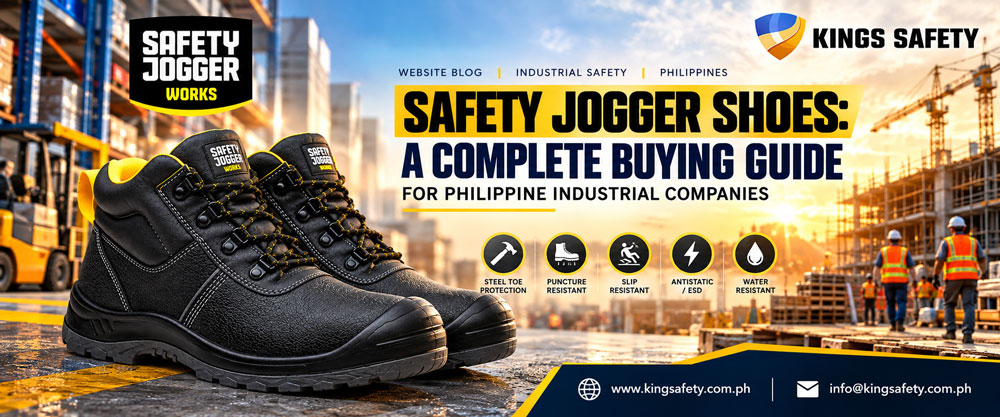
Introduction: Why Safety Jogger Shoes Matter for Industrial Businesses
Choosing the right Safety Jogger shoes is an important decision for Philippine industrial companies that want to protect their workforce, support workplace safety, and maintain efficient daily operations. From manufacturing facilities and construction sites to warehouses, logistics centers, and maintenance operations, workers may encounter hazards that require specialized protective footwear.
Ordinary shoes are not necessarily designed to protect against falling objects, compression, sharp materials, or slippery industrial floors. Safety footwear is developed to provide specific protective characteristics, depending on the model and its intended application.
For businesses purchasing footwear for multiple employees, the decision involves more than choosing a popular brand. Companies need to consider workplace hazards, protective features, comfort, sizing, applicable safety standards, product availability, and the supplier’s ability to support their purchasing requirements.
Safety Jogger offers a range of protective footwear designed for different professional environments. Purchasing managers, safety officers, operations managers, and business owners can all make better decisions by being aware of the variations among the models that are available.
This guide explains what to look for when buying Safety Jogger shoes in the Philippines, how to match footwear with workplace requirements, and how to approach industrial safety footwear procurement more effectively.
What Are Safety Jogger Shoes?
Safety Jogger is a safety footwear and personal protective equipment brand offering products for industrial and professional applications. Its footwear range includes different designs and protective classifications intended for varying work environments.
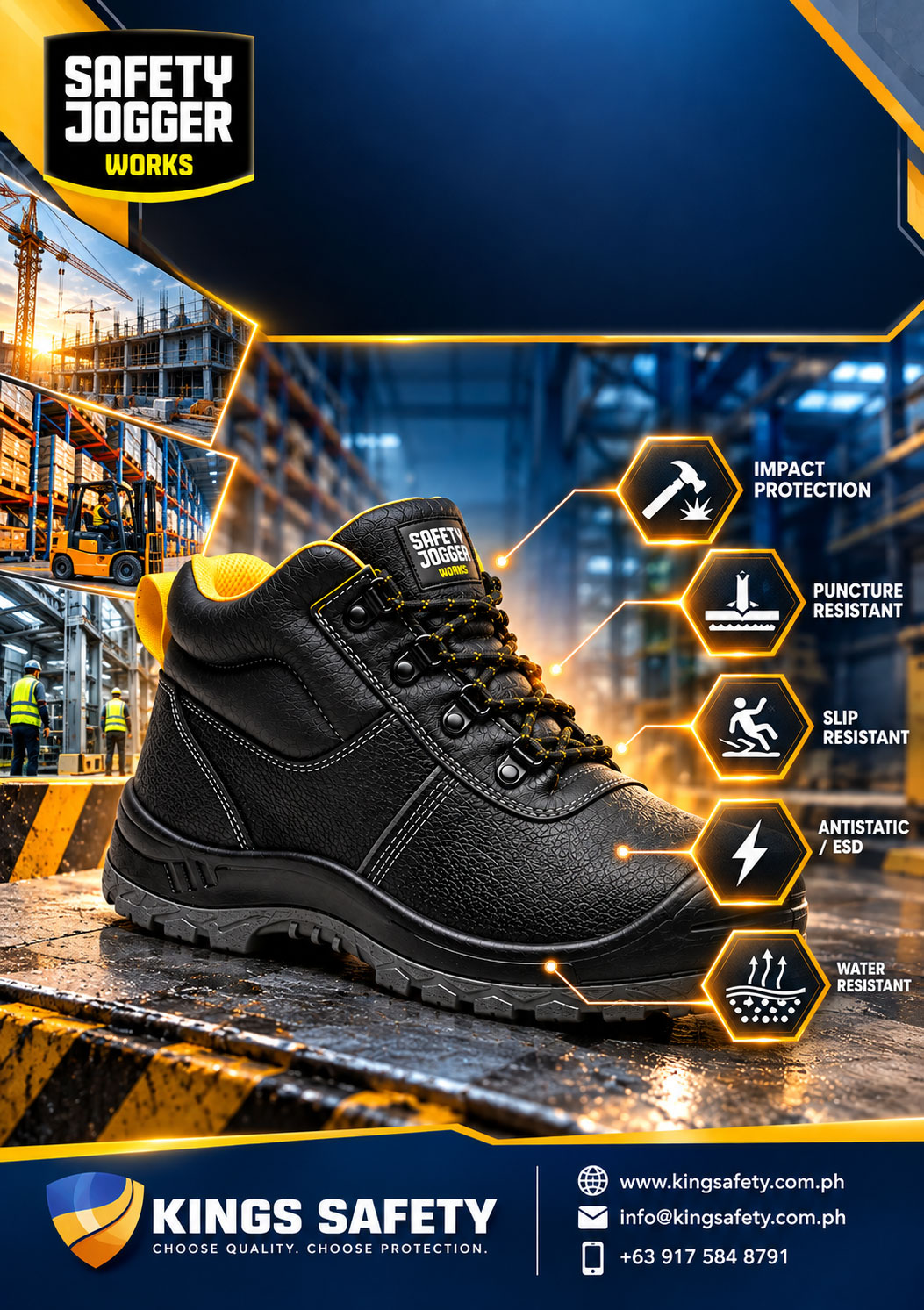
Unlike ordinary casual shoes, safety footwear may incorporate protective features such as reinforced toe caps, slip-resistant outsoles, puncture-resistant midsoles, antistatic properties, and specialized materials.
However, not every Safety Jogger shoe includes the same protective features. The model, its technical details, and the standards under which it has been certified or tested determine the precise level of protection.
For example, a worker handling heavy materials may need footwear with impact protection, while an employee working in an electronics production environment may require footwear with suitable electrostatic discharge properties.
Businesses should therefore identify their workplace hazards before selecting a particular model.
When purchasing Safety Jogger shoes, review the product’s specifications, intended use, protective classification, sizing information, and available documentation. These specifics aid in determining whether the shoes are appropriate for the task at hand.
Why Industrial Companies Need Appropriate Safety Footwear
Long stretches of time may be spent by industrial workers walking, standing, moving through crowded work areas, operating machinery, and lifting materials. Depending on the environment, their feet may be exposed to several types of hazards.
Protection Against Impact and Compression
Heavy materials, tools, and equipment can create impact or compression hazards. Safety footwear with an appropriate protective toe cap can help protect the toes against specified impact and compression risks.
Companies should verify the protection offered by the selected model rather than assuming every work shoe provides equivalent protection.
Reduced Exposure to Slipping Hazards
Industrial floors can become slippery because of water, oils, cleaning products, or other substances.
Suitable slip-resistant footwear can help reduce slipping risks when its performance matches the workplace conditions. Nevertheless, slip resistance does not guarantee that a worker cannot fall. Floor maintenance, housekeeping, and safe working procedures remain essential.
Protection Against Sharp Materials
Some industrial and construction environments contain nails, metal fragments, sharp debris, and other objects that can injure the underside of the foot.
Where these hazards are present, businesses may need safety shoes with an appropriate puncture-resistant midsole.
Comfort During Long Working Hours
Comfort is another important purchasing consideration. Workers may wear safety shoes throughout an entire shift, making proper fit, suitable sizing, cushioning, and breathability relevant to daily use.
Comfort alone does not establish whether footwear is safe for a particular job. The best option strikes a balance between the necessary protective features and worker comfort.
Key Safety Features to Look for in Safety Jogger Shoes
Understanding the main footwear features can help industrial buyers compare products more effectively.
Protective Toe Caps
A protective toe cap is designed to provide specified protection against impact and compression.
Depending on the model, toe caps may be made from steel, composite materials, or other engineered materials.
Steel toe caps can provide robust impact protection, while certain metal-free designs may offer benefits for workers who need lighter footwear or regularly pass through metal detectors.
Neither material is necessarily the best fit for every workplace. Buyers should assess the product’s certified performance, weight, working conditions, and other job requirements.
Slip-Resistant Outsoles
Slip-resistant outsoles are particularly relevant in warehouses, manufacturing facilities, maintenance areas, and other workplaces where floor conditions may vary.
When comparing Safety Jogger shoes, examine the manufacturer’s stated slip-resistance classification and the conditions under which the footwear was tested.
Remember that performance can vary with floor contamination, footwear wear, and maintenance. Appropriate housekeeping and hazard controls are still necessary.
Puncture-Resistant Midsoles
A puncture-resistant midsole is intended to help protect the underside of the foot against specified penetration hazards.
This feature may be useful in construction, manufacturing, maintenance, and material-handling environments where sharp objects could be present.
Different models may use steel or non-metallic protective components. Buyers should check the product specifications to understand the type and extent of protection provided.
Water Resistance and Oil or Fuel Resistance
Some safety footwear is designed for environments where workers may encounter moisture, oils, or certain industrial substances.
These properties are not interchangeable. Water resistance does not necessarily mean a shoe is waterproof, and oil-resistant outsole properties do not automatically establish resistance to every chemical.
Companies should identify the actual exposure and select footwear with suitable documented properties.
Comfort, Fit, and Breathability
Safety shoes should fit properly and allow workers to carry out their duties without unnecessary discomfort.
Consider the following:
- Correct shoe size and width
- Adequate toe room
- Secure heel fit
- Breathable materials where appropriate
- Suitable cushioning
- Compatibility with work socks
- Ease of movement throughout the shift
For large workforces, purchasing teams should plan for different sizes rather than assuming that one size range or shoe design will accommodate everyone.
Electrical and Antistatic Properties
Electrical hazard protection, antistatic footwear, and electrostatic discharge (ESD) footwear serve different purposes.
Antistatic or ESD footwear is designed to manage static electricity under specified conditions. Electrical hazard-resistant footwear is intended for a different set of risks and must meet the relevant requirements.
These properties should never be treated as interchangeable. Businesses should consult their safety personnel and verify product specifications before purchasing footwear for electrical work or static-sensitive environments.

How to Choose Safety Jogger Shoes for Different Industries
The best footwear depends on the work environment, the hazards involved, and the requirements of each job.
Manufacturing and Factory Operations
Manufacturing employees may work around machinery, moving components, raw materials, sharp objects, or industrial equipment.
Depending on the process, suitable footwear may need protective toe caps, slip-resistant outsoles, puncture resistance, or other specialized features.
Safety officers should assess the specific production area and select footwear based on its actual risks.
Construction and Engineering
Construction workers may encounter uneven ground, sharp debris, heavy materials, wet surfaces, and other changing conditions.
Footwear with appropriate impact protection, puncture resistance, grip, and durability may be necessary depending on the job.
Workers performing specialized activities may require additional protection beyond the features found in general-purpose safety shoes.
Warehousing and Logistics
Warehouse employees frequently walk, stand, move stock, and work around pallets, carts, forklifts, and stored materials.
For these workers, the purchasing decision should consider impact protection, slip resistance, fit, comfort, and the floor conditions throughout the facility.
A shoe designed for a clean warehouse floor may not be ideal for a loading area exposed to moisture or other contaminants.
Automotive, Maintenance, and Industrial Processing
Automotive workshops and maintenance operations may involve oils, lubricants, tools, sharp components, and machinery.
The correct footwear should match the exposure and the task. Businesses should check whether the selected model offers the specific outsole, toe protection, and other properties required.
Electronics and Static-Sensitive Workplaces
Electronics manufacturing and other static-sensitive environments may require specialized footwear with verified ESD properties.
In these settings, selecting a shoe based only on appearance or general safety classification is insufficient. The footwear must be suitable for the facility’s electrostatic control program.
How to Select the Right Safety Jogger Shoes in the Philippines
For companies purchasing Safety Jogger shoes in the Philippines, a structured selection process can help prevent unsuitable purchases and simplify future procurement.
Step 1: Identify Workplace Hazards
Start by identifying the hazards workers face in each area.
Consider falling objects, sharp debris, slippery surfaces, chemical exposure, static electricity, and other job-specific conditions.
The assessment should guide the footwear requirements.
Step 2: Define the Required Protection
Determine which protective features are necessary for each worker role.
Avoid selecting shoes simply because they are described as industrial, heavy-duty, or comfortable. Confirm that their specifications match the hazards identified.
Step 3: Review Product Specifications
Check the model’s technical information, protective classification, applicable standards, materials, and available documentation.
Do not assume that all products from the same brand have identical protection.
Step 4: Confirm Sizing and Fit
For bulk purchases, collect the required sizes and consider any special fit needs within the workforce.
Where practical, arrange appropriate fitting or sample evaluation before committing to a large order.
Step 5: Check Availability and Reordering Requirements
Companies should establish whether the required models and sizes are available and consider how easily they can replenish their stock.
This is particularly important for businesses with multiple locations, regular employee onboarding, or recurring footwear replacement requirements.
Step 6: Evaluate the Supplier
Consider product knowledge, clear specifications, communication, availability, documentation, and the ability to support business purchasing needs.
For recurring orders, consistency and dependable procurement processes can be just as important as the initial purchase.
Safety Jogger Shoes and Workplace Safety Requirements in the Philippines
Philippine businesses should consider applicable occupational safety and health requirements when purchasing protective footwear.
Republic Act No. 11058 and the applicable implementing rules and regulations establish workplace safety and health obligations. The Occupational Safety and Health Standards also address personal protective equipment, including the need for equipment to be appropriate for the exposure and work being performed.
Employers should identify workplace hazards, determine appropriate protective measures, and ensure that required PPE is selected and used correctly.
Safety footwear should be treated as part of a broader safety program that may include engineering controls, safe work procedures, housekeeping, worker training, and regular inspections.
For purchasing teams, the practical lesson is straightforward: choose footwear based on the actual risks and verify the relevant product specifications and documentation.
A brand name alone does not establish suitability for every industrial application.
Where to Buy Safety Jogger Shoes in the Philippines
When sourcing Safety Jogger shoes in the Philippines, industrial buyers should look for a supplier that can help them identify suitable products and organize their purchasing requirements.
For businesses buying for multiple workers, important considerations include:
- Availability of the required models
- Size ranges and fit options
- Clear product specifications
- Information about protective classifications
- Support for bulk purchasing inquiries
- Communication about stock and replenishment
- Assistance with identifying appropriate product options
Companies should prepare their requirements before contacting a supplier. This may include the number of workers, job roles, sizes, workplace hazards, desired footwear features, and estimated order quantities.
Providing these details can help make product inquiries more efficient and reduce the risk of selecting unsuitable footwear.
Businesses exploring additional PPE can also review King Safety’s body protection product category as part of their wider workplace protection procurement process.
For footwear specifically, buyers should confirm the relevant Safety Jogger models, sizes, and current availability with the supplier before placing an order.
Planning to purchase safety footwear for your team? Prepare your workforce requirements and request information about suitable models, product specifications, and available quantities to support a more informed purchasing decision.
Frequently Asked Questions About Safety Jogger Shoes
What are Safety Jogger shoes used for?
Safety Jogger shoes are protective footwear designed for various professional and industrial applications. Depending on the model, they may offer features such as toe protection, slip resistance, puncture resistance, or specialized static-control properties.
Are Safety Jogger shoes suitable for industrial work?
Many Safety Jogger models are designed for industrial and professional environments. However, suitability depends on the particular model, its protective classification, and the hazards workers encounter. Companies should verify the product specifications before purchasing.
How do I choose the right Safety Jogger shoes?
Identify workplace hazards first, determine the protection required, and compare the specifications of suitable models. Also consider fit, comfort, durability, product documentation, and supplier availability.
Are all Safety Jogger shoes steel-toe shoes?
No. Models with various toe-cap materials and configurations are included in the range. Some use steel, while others may use composite or other materials. Check the individual product specifications to confirm the toe protection provided.
Are Safety Jogger shoes slip-resistant?
Many models include slip-resistant outsoles, but the precise performance and classification can vary. Buyers should check the specifications of the particular model and consider the floor conditions where workers will use the footwear.
Where can I buy Safety Jogger shoes in the Philippines?
Industrial companies can contact suppliers of safety equipment that cater to the Philippine market. Compare product specifications, model availability, sizing, and the supplier’s ability to support your purchasing requirements before ordering.
Can companies purchase Safety Jogger shoes in bulk?
Businesses can inquire about bulk purchasing through relevant suppliers. The appropriate order quantity depends on workforce size, required models, sizes, current availability, and expected replacement needs. Confirm current stock and commercial terms directly with the supplier.
How often should safety shoes be replaced?
There is no single replacement interval that applies to every safety shoe. Replacement depends on the manufacturer’s instructions, wear, damage, exposure, frequency of use, and workplace inspection procedures. Footwear should be inspected regularly and removed from service when it no longer provides the required protection.
Conclusion: Choose the Right Safety Jogger Shoes for Your Workforce
Choosing the right Safety Jogger shoes is an important part of managing workplace risks for Philippine industrial companies. The best option is not necessarily the most expensive or the most popular model. It is the footwear that provides the appropriate protection for the work being performed while fitting the worker properly.
Businesses should assess hazards, compare protective features, verify product specifications, and consider comfort, sizing, availability, and future replacement requirements.
For purchasing managers, safety officers, and business owners, a structured approach can make safety footwear procurement more effective and help support a consistent workplace safety program.
If your company is sourcing Safety Jogger shoes for manufacturing, construction, warehousing, maintenance, or other industrial applications, begin by defining your requirements and identifying suitable models.
Equip your workforce with footwear selected for the job. Review your industrial safety requirements, confirm the appropriate product specifications, and contact a suitable safety equipment supplier to discuss your business’s purchasing needs.